


- Anglesey Sea Kayaking
- British Canoeing Awards
- sea kayak personal performance award
- coastal sea kayak personal performance
- advanced sea kayak personal performance
- BESPOKE Sea Kayaking
- sea kayak leader training - moderate tidal water
- sea kayak leader assessment
- Advanced sea kayak leader training - tidal water
- Advanced sea leader kayak assessment - tidal water
- Personal Performance Award Profiles
- Book Online
- Find course
- Reviews & Feedback
- Scotland Sea Kayaking
- Sea Kayak Sale
- Our Calendar
- Book Online
- About Us
- Find us
- Language

Sea kayaking Wales, Anglesey, with Coastal Spirit. A Blog of sea kayaking courses and personal expeditions and adventures. Wales, Scotland, UK and beyond.
Keep in touch throughout the year ...
#findyourepic #getoutside #intothewater #exploredreamdiscover
Shetland is impressive, It really is! For several years I heard this said, and I'm not sure what finally convinced me to book a ferry, but I'm super happy, I did. Massive caves, super long tunnels, Geos (pronounced Gee-Oh) is a narrow, deep cleft in a rock face, tide races, exposure and commitment, big ocean swell, stunning wildlife, unsettled weather, oh and remote. I've only been to Shetland twice, May 2020 was to be the third time.

This blog is about my first-time sea kayaking in Shetland and a few quick-fix Performance Psychology top tips that I use, with my self and those I work with.

Blockbuster locations - My top three.
Papa
The

The gannets of Noss. I've been privileged to see gannets before in their thousands, spiralling above and nesting on islands. But never previously on a vertical rock face as well as doing battle with Great Skuas. It's like a world war 2 movie 'dog fight' and its happening right in front of you.
I guess it means I'll have to spend more time up there in 2021. Our next course dates or sign up for our newsletter to be the first to know.

Performance Psychology - quick fixes
The body and mind are linked, so if we can make a change with our physiology, it will influence or psychology and visa versa.
Forcing a smile helps to shake off the stress, by relaxing the facial muscles and returns us to the moment - we can't be anxious and smile!
Diaphragmatically breathing is one of the most potent techniques for reversing the stress response. When anxious, our bodies tend to revert to shallow, rapid, chest breathing. Doing so keeps us in fight or flight mode, which is a sympathetic shock. One technique is called box breathing:
Box breathing: in through your nose for x4, hold x4, out through the mouth for x4, hold for x4 and repeat.
Squeezing the paddle and creating tension in the body, then letting go, releases the pressure. Yul Brynner used to get stage fright, and he found that if he pushed really hard on a wall as if he wanted to knock it down, it helped calm his nerves, before a performance. The mind can perceive the sudden sense of relaxation within the body as the reduction of anxiety and stress.
Self -Talk such as "Don't think! Play!" is a super cue for paddlers when faced with pressure, in a tide race, for example. When you find yourself overthinking and if you can't cut off your thoughts altogether, choose one word or a short phrase that directs your focus and instructs your actions.
Useful "cue words," or Self-talk such as "I'm coming up" after a capsize and beginning to roll. "Look for the eddy" for a paddler in the main flow or "what's important now?" with the paddler that just swam. Captures what you're trying to accomplish and helps you stay focused or re-focus on the task at hand.
Beat The Stress Focus – is a useful way to pull techniques together, with a plan. B is for Breathing, T is self-Talk, S is Seeing – visualize/rehearse, and F is Focusing your attention. Working with this model or creating your own can be helpful, in providing control in challenging and dynamic environments.
Two web sites which provide further useful thought, are worth exploring. The first is based on an actors perspective of Managing Stage Fright, and the second is Performance under Pressure, from a medical perspective, which has a lot of additional links. It's one of the best sites I've found.
Which is greater?
If we now come back to my original question. Is your want more significant than your fear? If yes, from my perspective and experience, then the above techniques will be super productive. Hence the various methods are called 'coping strategies'. Your confidence has dropped, and you need to re-focus. Yes, they will need to be practised just like your stern rudder did.
If your fear is more significant than your need and want, then it could suggest you've moved too quickly, maybe missed a level and not consolidated skills, experience and knowledge. The concept of comfort zones can be useful to consider. Stepping down a level to what you feel is suitable, so you can progress at your rate and address what's important. Re-focusing can be very productive and motivating.

The fear needs to be understood and addressed for any progress to be made. Loss of control, then consider what would give you control back? For example, understanding tidal planning and the 50/90 guide? Do you ever choose where you paddle? The relationship and impact between swell, wind and current? Or for example, If its a fear of failing, ask your self: What aspect could you fail at? What's holding you back? What can you do about it? Remember the last blog about controlling the controlables?
How too
Cross-training can be really useful. For example, If its lack of flexibility, then consider yoga or pilates, if its stamina, how about taking up, running, cycling, using a rowing machine, flat water race training or going swimming. If it's becoming more dynamic with decision making and more short sharp burst of energy, consider white water paddling.
Keep in mind that progress could also be a sideways move. This would mean understanding the triggers and what creates the anxiety so that you can avoid these in the future. For example, when it gets windy, it's difficult to control my sea kayak. How strong is the wind? Then consider paddling under that wind strength and get a good understanding of the various weather forecast so you gain some further control.
A more in-depth approach would be to consider a few Cognitive Behavioural Therapy (CBT) sessions. This way you have an opportunity to develop further strategies to manage thoughts effectively, with a professional skilled in this area.
Our time is precious, so make sure it's worthwhile, enjoyable and what we want it to be. It's about investment. If we invest, we will reap the benefits. How much are you prepared to invest?
I hope to see you on the water very soon!
PS: Make sure you book a cabin, its worth it and adds to the whole experience

Focus on the Controlables.
The "uncontrollables" is the most significant mental trap in pressure and stressful situations. The "uncontrollables" are all the things in a performance that is directly out of your control. As paddlers, for example, these are wind strength and direction, air/water temperature, current strength, swell height and power. To name a few.
When the focus is on the uncontrollables, three things will happen – 1) anxiety creeps in, and tension builds up. 2) self-confidence begins to slip and 3) performance begins to suffer. We then have created a self-perpetuating vicious circle.
If we focus on what are the elements we can strengthen, develop and ultimately control, we gain confidence. If we consider our effort, attitude/optimism, focus, preparation, those we paddle with, the location, the time in the day, and month, what we wear, what we eat and so on. This all begins to outweigh the negative stuff.
If we look at effort, how hard I work is up to me and no one else. Preparation I find is massive towards building my self-confidence. If I've put the real-time in I feel secure and comfortable, if my kit is working for me, I'm pleased with the time I put in testing and considering options. To the food, I'm eating that's keeping me ticking over and switched on, tastes good and give me the

Choose to trust what you got. At the heart of paddling with confidence in the face of pressure is trusting one's ability and paddling in the present moment. When pressure builds, our minds often become cluttered, and we lose our focus. We tend to focus on what just happened or what might (or might not) happen next.
The key to being "
This can also apply with the kit - trusting that I've got the right, paddle and in this case, the paddleboard for the task, I've set myself. This is because I've used, I'm very familiar and comfortable with it.

Preparation
I'd had a good 2017 on my paddleboard, and as I moved into 2018, I felt my skill level, endurance and mental attitude was in the right place. In the January I solo SUP out to the Skerries, an island of the NW of Anglesey. Then around May I did an overnight paddle with my kit and a bivi bag and now with a solid
Paddleboarding Solo Around Anglesey
During a super settled spell, in June 2018, I set off around 0500 in the morning. Why? It was something I could control, which allowed me a full day to work with what came my way. I had the flood with me from before Rhoscolyn which took me through the stacks (offshore) and across Holyhead Bay to Carmell Head (after waiting for The Irish Ferry to come into Holyhead).
I had just over an hour of the flood tide with me, but the back eddy at Carmell Head inshore was running against me now. So I slowly began to head into the shore. A fishing boat came to check me out, and I thanked them and said ' the coastguard new I was on the water.' I landed and took a three-hour break, refuelled with lots of water and a couple of mugs of tea, had a good lunch and a lovely snooze in the sunshine.
Pushing on
I was super pleased to be on the North coast and began to consider options. Stay where I was, push on (once the ebbing tide allowed to me) to
I eat as quick as my weary body allowed and set my bivi up. A slept solid. I'd planned to be on the water early, but due to my late arrival, I decided to let the alarm clock slip. Back on the water, I started to cross Red Warf Bay, with a gentle wind on my back. It ended up being very slow. Probably because I was weary and rather than being in the eddy I was going against the ebbing current (flowing against me) and with no close coastline, it was hard to measure my progress. It was time for a good welsh breakfast at the Pilot House cafe! I worked with the flood as far as I could and then eddy hopped down to Menai Bridge and waited for the ebb to allow me through the Swellies. I was soon back at my van parked down by the Mermaid Inn, with big smiles and a great feeling of satisfaction.
My short film below captures the essence of my adventure.
Reflections
I was the first person to paddleboard around Anglesey solo and self-contained and the third person in total. I had a personal best of 90km in a day, id paddled around 140km and in 23 hours total on the water time, in two days. I'd seen it as fun, I saw shearwaters (amazing sea birds) at the start and at the end of the day, porpoises close in on the north coast and just as I was flagging and a magical pod of
How To
I get a large piece of paper out and create a large spider diagram with what I want to achieve in the centre and around the outside what I can control. I consider and highlight what gaps may be in my performance, ability, knowledge, skill and kit, with a different colour pen. Then create an action plan to focus on and work with.
It had taken me three years from when I first starting paddleboarding and the early adventures of the three biggest natural Llyn, Lakes and Lochs and the first Brit to SUP around Menorca
I had 3 main goals with my attempt to paddleboard around Anglesey 1) to enjoy it and if I wasn't then land and then reconsider options (part of the reason I got off at Carmell Head). 2) be on the water for at least one sunrise 3) develop my forward paddling style further. I had purposely focused on Process/Performance goals, rather than Outcome (of getting around Anglesey) as I knew my mindset was going to be crucial.
What have you set your self? How can you use the above to assist you on your journey? How can you keep a focus on the fun as well achieve the goal?
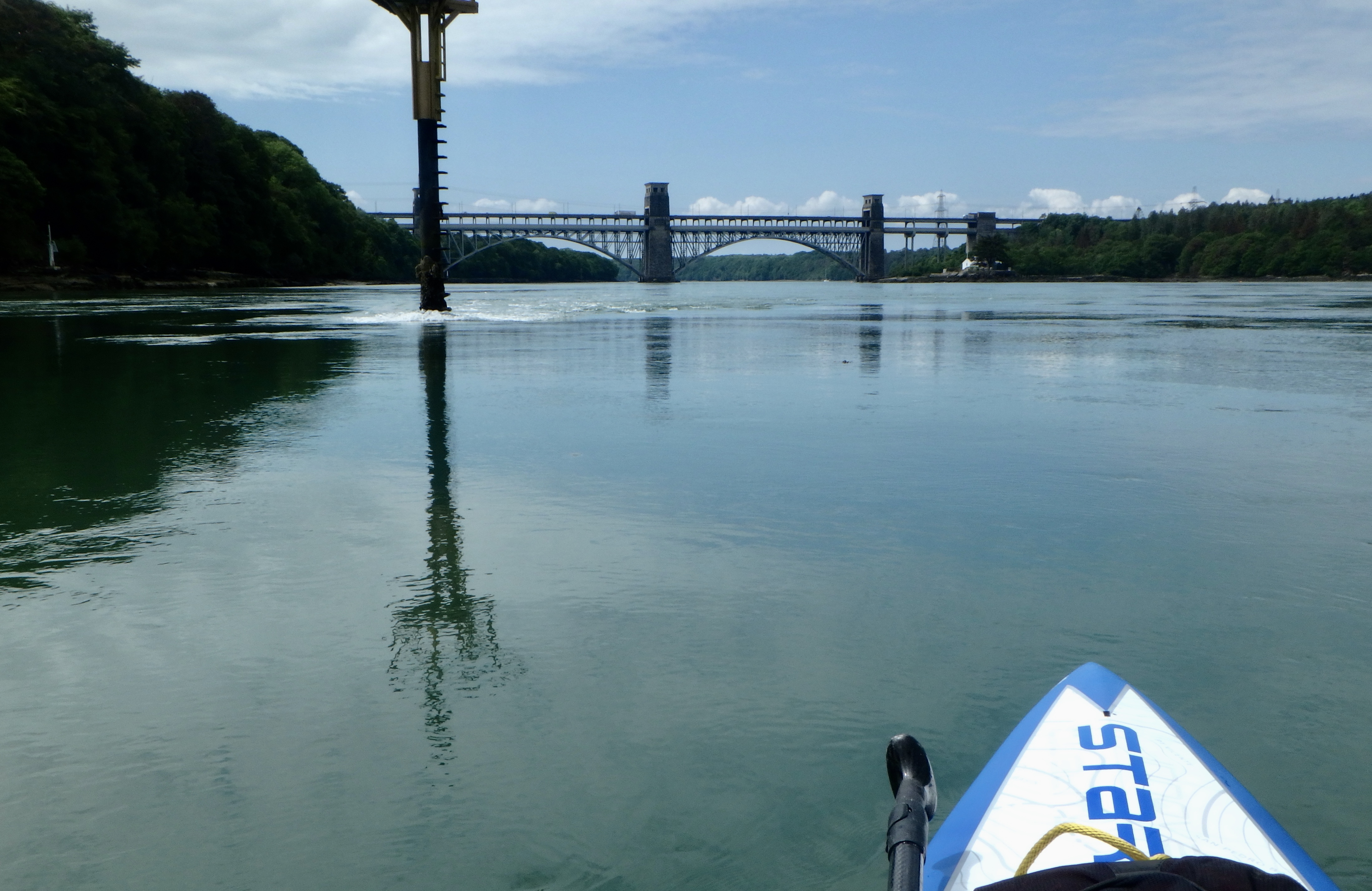
My next blog ill look at a few top tips and quick fixes that can help when emotions are running high and Ill also talk about my first-time sea kayaking up in Shetland. Shetland really did blow me away with its beauty!
 |
| Johana approaching The Old Man of |
Part three of the last three years picks up on the start of one BIG Adventure, with Around Wales in 2010 through to the 2018 Roof of Britain expedition and the preparation involved.
In the Beginning
It was back in 2010 when Roger first thought of a big commercial expedition. He was keen to share a significant experience, an adventure with others. The reality is sometimes our friends are not interested in making a BIG trip, and he wondered if there would be enough interest. Roger was also hoping that the experience could be a springboard towards greater independence.
Around Wales in 2011, with Di, Sue, Paul and Sonja in van support for the canal section. Di named the expedition and wrote in two parts an article "Eat, Sleep Paddle -part 1" and part 2. It certainly got Roger thinking about the future potential with something more remote and the Roof of Britain seemed to tick the boxes!
To catch up you can read about the two previous RoB expeditions on a blog for the 2015 and 2017. The 2015 blog was written by the group.

The Roof of Britain 2018
The third Roof of Britain was with two very focused Swedish paddlers - Johanna and Anders. We had a few super windy days, and down to the in-depth preparation from both Johanna and Anders, we managed a few huge days. This which meant we stayed ahead of the storms.
We had some fantastic weather at times and the last couple of days down the Great Glen were outstanding. The short film below catches a few of the highlights.
Preparation
With each of the BIG expeditions, preparation has been a critical component, with time on the water, putting the miles down in training, checking kit and equipment is up for the job and considering food. What tastes good, provides the calories and also agrees with me. With around Wales, Roger got a great deal on energy bars. But, they all tasted the same - variety, for me, is the key!
Cross-training becomes super useful from getting out on that bike or a run and putting down the distance to yoga and core work in a class, gym, your own or online practice. It's about getting the body and mind in the right place. They are both linked after all. Roger has found that if he knows he can paddle 50km in a Beaufort force (Bf) 4/5 tailwind before atrip, his confidence is in a realistic and robust place. This, for example, allows him to manage a (Bf) f5/6, 30km downwind paddle. He thinks of the time spent in 2mt waves playing in that tide race, responding to hits and the dynamic rough water. It comes back to physical and mental capacity, which Roger mentioned in the previous blog.
In my next blog, I'll look at my Stand up Paddleboard (SUP) around Anglesey, the third person in total and the first person solo. What motivated me, and why?
 |
Rhoscolyn, Anglesey, North Wales Sea Kayaking | Surf and tide
With the strong currents, tide races and overfalls around Anglesey, plus according to the Met Office Anglesey is also the 7th windiest location in the UK. Coastal Spirits Surf and Tide
Ability and Level
Each of the courses has a maximum group size of four people, with the ability level of each individual from top-end Intermediate to advanced paddlers. When the first person books, this will tend to dictate the balance of the course. Either way, others are informed, so all have an understanding of the course level.
Background and Content
This type, of course, was more traditionally offered on a sea kayak symposium and for groups from Europe and Scandinavia, keen to get into the dynamic rough water.
Core content and training tends to involve aspects of the four elements below, and individuals want and needs :
Effective tidal planning - what conditions do we want, based on the forecast? If a tide race is suitable, then when do we want to arrive, after or before maximum? Could we get surf at this point and why?
Boat handling skills - keeping momentum and remaining dynamic, when committed, effective braces, power transfer and explosive energy.
A tactical approach - the strokes, actions and procedure that must be taken to achieve the chosen goal and to have a plan B, C and so on ...
Performance psychology – understanding our 'chimp' (the chimp paradox is worth a read), the concept of 'flow' and working around 'winning is in the mind' are a couple of useful ideas and approaches. I'll look at briefly the Chimp Paradox below and will pick up on the other two theories on another blog.

The Chimp Paradox
Written by Steve Peters, who was a consultant with British cycling and is now a performance coach advisor to Olympian's and elite athletes. He holds a medical degree and also trained as a psychiatrist. Academics often struggle with sharing and communicating knowledge in ways people enjoy. Steve uses analogy and metaphors as a useful way to learn.
One of the significant points that stands out for me is that your brain has two main competing forces, and we need to recognise them. Prefrontal cortex = human/ logical part of the brain and limbic system = inner chimp/ emotional part of our brain. The human acts rationally, based on facts and sees many answers to situations, in shades of grey. While the chimp only decides using emotions and sees solutions in black and white.

State of mind - It's advantageous to observe our own state of mind and if you're getting stressed ask 'who's in charge here? Do I want to feel and act this way? Or is the chimp taking over? 'which pathway am I going down?' Or in some cases, rather than a chimp it's a silver-backed gorilla! If I can only see one answer to a situation, I'm most probably working in chimp mode. Do I want to be?
Our emotional part of our brain is more potent than our logical side, so observing and asking questions early on is key to managing ourselves more effectively in challenging stressful situations, such as powerful dynamic surf.
Example: In a dynamic beach surf environment, your chimps job is to protect you, so listening and changing venues may be the best action. Or choosing to stay and stretch that comfort zone appropriately and easing your chimps concerns, allowing the logical self to gain control again. This may mean, doing a 15-20 minute stretching session, some side surfing in the soup, choosing an area with a small set of waves or getting on, out through the surf and working outback.

At the end of the day
Rather than getting too tired, missing that roll and taking a swim, which then likely supports your Chimps primary concern. Pacing yourself, managing your capacity, so you finish wanting more, Is the key. Ask your self two questions. 1) how much more mental capacity do I have left? How much more physical ability do you have left? And measure with a percentage mark.
Feedback and individual chats tend to happen as they arise on a course when it's real and in your mind. Each weekend ends with a group discussion and reflections so that each person has a more precise direction on what's required to progress towards their own chosen goal.
Below is the 2nd film Roger had created around 'what is sea kayaking?' This time the film considers gentle dynamic movement, of current and tide. Some of the fun and magic, which highlights why Anglesey is such a special place for Roger. The film ends with a fun and playful North Stack
My next blog will focus on 2018 Roof of Britain one-month-long expedition and provide an insight into the preparation for a BIG trip.
Plus despite these other wonderful destinations how returning to North Wales, Anglesey holds the magic. |
 |
| Sea kayaking North Wales, Anglesey - wind against tide on the Menai Straits. |
A lot has gone on since my last blog, three years ago about Stand Up Paddleboarding (SUP) around Menorca. What's happened since then and what's new? Over the next few weeks, I'll aim to update and share some information about what's been going on. Then I'll move to one blog once a month.
What I can tell you now is, 2017 was a pretty fantastic year!
 |
| Kayak and Climb - NW Greenland Expedition and the area we paddled into |
Kayak and Climb - NW Greenland
 |
| Roger Chandler - 'Looking on Greenland kayak and climb expedition ' -photo by Olly Sanders |
We both were shocked by the amount of plastic we found on beaches and on one beach that we stayed for a few nights, we filled 7 IKEA bags of plastic. We burnt some of this, and more robust plastic we buried at the top of the beach. Sadly our feeling was that this had mostly come from local villages, where the waste tends to be burnt or not as the case may be. We also discovered, due to the location of the waste disposal facility rubbish can easily fall into the sea.
Seeing icebergs close up, from a sea kayak is pretty unique ( it was on my list of 50 things to do in my 50's) and the rock structures in the area are truly stunning. During the 20 days, we saw no whales but spotted a couple of hesitant and distant seals, many sea birds and of course the wonderful Arctic fox on our last nights camp was exceptional.
In total, we climbed three single pitch and three multi-pitch rock climbs (Olly did the leading), with two further summits achieved and my connection to the Arctic was born!
 |
| Tramuntana wind |
 |
| working hard to keep the noose in and on track |
 |
| Truly stunning |


 |
| Break time! |
 |
| A gentle headwind |

 |
| The most Northerly point, with Sonja on the left |
 |
| Magical sunrise start |


 |
| Leaving and the protected harbour of Alcaufar and the last 6km! |
 |
| Pausing ... |
 |
| Time for coffee |
 |
| Job done now time for some food! |
Roger
You can read here, a shorter version that I wrote for Stand Up Paddle Mag UK.
To see my video of the adventure on YouTube

6-9th November - Advanced sea kayak leader training (5*) with Open water navigation and tidal planning. With ratio of 1:4 - 2 places left.
13-17th November - Moderate sea kayak leader training (4*) with Coastal navigation and tidal planning. With ratio of 1:4 - 4 places left
9/10th December - Advanced sea kayaking. For those who are close to being assessed at Moderate sea kayak leader (4*) or Advanced sea kayak leader trained (5*). Based around the Advanced sea kayak leader and performance syllabus. ratio of 1:4 - 3 places left
16/17th Dec - Surf & tide races. From Intermediate to advanced and with the aim of really getting you surfing those waves. ratio of 1:4 - 3 places left.

13/14th January 2018 - Advanced sea kayaking, with ratio of 1:4 - 4 places left
3/4th Feb - Surf & tide races. Details as above and ratio of 1:4 - 3 places left
17/18th Feb - Intermediate Plus, working on Moderate water skills and ideal for those who have completed the Moderate sea kayak leader training and want support with their action plan. ratio of 1:6 - 4 places left
24/25th Feb - Surf & tide races. Details as above and ratio of 1:4 - 4 places left

28/2 - 4th March - Advanced sea kayak leader training and Open water navigation, with ratio of 1:4 - 4 places left
10 -14th March - Moderate sea kayak leader training and Coastal navigation, with ratio of 1:6 - 3 places left.
17/18th March - Surf & tide races. Details as above and ratio of 1:4 - 4 places left

Shetland sea kayak expedition - 23-29th July at £695 - 2 places left

Orkney sea kayak expedition - 4-10th August at £695 - 4 places left.

 |
| The start at |
My Facebook feed from the 16th April 2017, has the daily action here. I'm going to keep this Blog to the bare bones, with a summary, facts and my favourite ten photos.
 |
| looking up the Sound of Mull |
- From GPS our total distance was 727km
- 27 days in total with 8 days off, with 6 storm days and 2 days were we arrived earlier and decided to use the benefit of a public camp or caravan sight, to wait out the storm. In both
cases this really paid off, sogood sleep was had and we could each refuel.
 |
| Tobermory, Isle of Mull, with Don, Craig, Alan, Gerry and Roger |
 |
| Sunrise, just North of |
Longest day was day 25, with 67km and this was Wick on the East coast to 8km South of Helmsdale. 6 hours on a flood Spring tide and then paddling close in along a spectacular coastline with thousands of sea birds. A 13 hour day.
 |
| Gairloch, after a |
- Shortest distance was day 1, after leaving a car to Inverness and packing the boats at
Corpack (N of Fort William) to the Corran Narrows - 16km

- Our most efficient distance was our last day. Day 27 Cromarty to Inverness, 45km in under 5 hours!
- 11 wild camps, 7 public camps, 1 at a hostel, 4 in a caravan, 2 accommodation connected to a pub and 1 night on a floor (brother in law of Alan's).
 |
| Arrival at the stunning Sandwood Bay NW Scotland |
 |
Sandwood Bay was totally magic!
|
 |
| Duncansby Head and we're on the East coast! |
- We saw many sea ducks, red and
black throated divers as well as great northern, 2white tailed sea eagles, 7-9 otters, 4 pods of dolphins (common,risso and 2 bottlenosed), submarine motoringalong 1-2km North Rona, 2 artic skua's, puffins from around the Gairlock area and my first time hearing puffins calling was at Thurso. Many other sea birds with the most prolific on the east coast south of Wick. - We camped/
bivied at Sandwood bay (last sandy beach before Cape Wrath and landed for a break at Kervaig (first sandy beach on the North coast). Both are in amazing locations and two places I thought it would takealong time to get the right weather, to be able to visit!!
 |
| Bringing the journey to an end at Inverness ... |
 |
| Thanks to Tavi for this original creation! |
 |
| On the North coast of the RoB and a totally magic day with a BIG ground swell and a super sunny blue sky day. |
 |
| Ive since learnt its better to ware gloves due to the toxins! |
Back in 2008 Olly first invited me to Greenland but at the time it was my first real season with Coastal Spirit, so I said no!
When discussing the possibility of a trip in the summer of 2017, I was really keen to be part of it. That possibility has now become a reality with funding from the Artic Club and supported by Gino Watkins Memorial Fund; A & J Simpson Award. Many thanks for this!
The plan is to be self contained and journey in sea kayaks going North of Upernivik (on the North West coast) to explore the numerous potentials for climbing on the many islands in this area. The main objectives will be climbing alpine style roures we come across, accessed in a low impact approach from sea kayaks.
We will have 28 days in total. This will allow us to travel to the area, and probably 24 days in Greenland. We will need to pack our sea kayak with all of our food, camping kit, paddling and rock climbing gear for the whole time.

Im really looking forward to my
first time in Greenland and my second time above the Artic
circle. I'll aim to keep you all updated with progress.
I would also like to thank Tent Meals for their support towards our expedition, with great tasting, natural high energy breakfasts and evening meals.
 |
| Photo taken by Olly Sanders |
 |
| Photo taken by Olly Sanders |
 |
| Photo taken by Olly Sanders |
Experience the thrill of catching a wave, developing greater control and stretch your comfort zone, with support and guidance - good 3* skills as a minimum and the ability to roll at the Intermediate level. If windy we go beach surfing or a down wind run on the classic Menai Straits or if calm surf one or more of Anglesey's classic tide-race's. Learn how best to use your body, gain an insight into Performance Psychology, hear the rush of the waves and feel the salt on your face.
With a maximum of four paddlers you get more from this exciting opportunity and can really develop.
To enlarge the photo click on one of them.


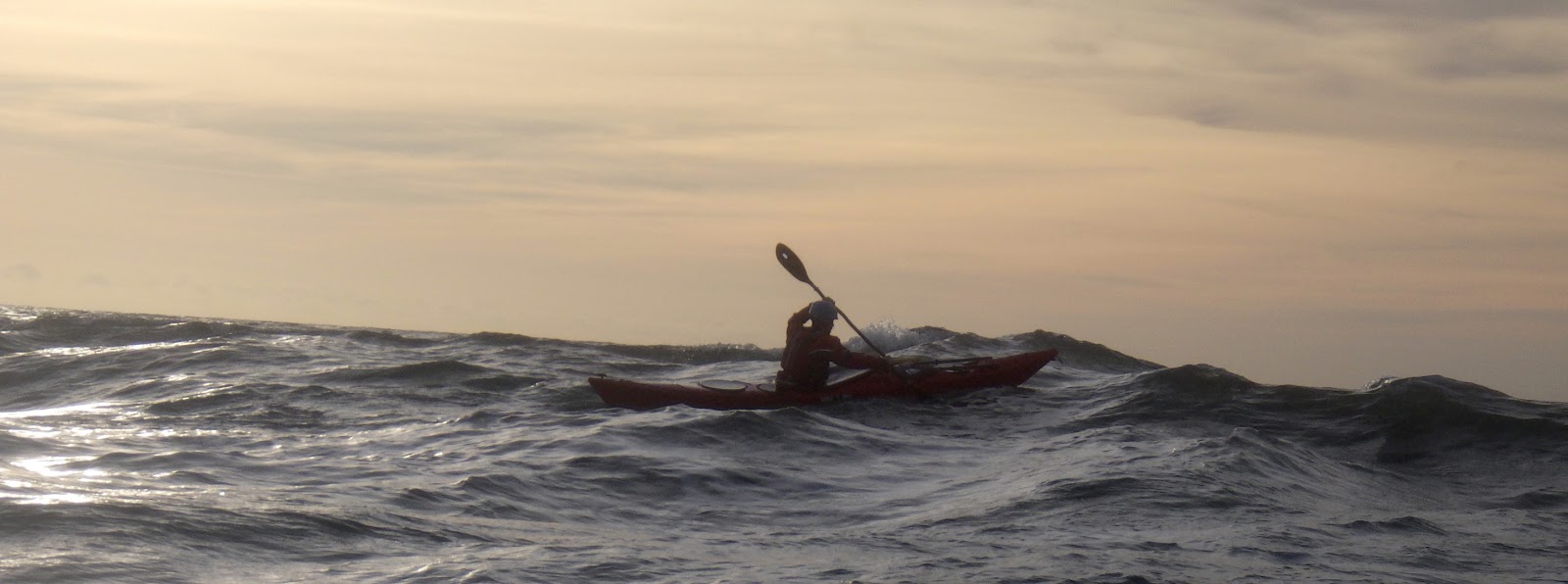


Surf & Tide-race's - Intermediate Plus (4* leader trained) to Advanced with maximum of four paddlers and with one place left. Cost £160 on the 11/12th March. Follow this link

Sea Kayak Leader Training (4*) on the 27th-30th March with Coastal Navigation & Tidal Planning (CNTP) theory. Three places left and at a cost of £270. Follow this link


 |
| Salcombe, South Devon - Jack and Sean |
 |
| Wondering 'should I stay or should I go ... |
 |
| Taking a short land break and no rain! |

 |
| Ambleside and time to pack it all away for the steam ferry ride back |
 |
| The drive North and a brief pause to soak up a super sunset |
 |
| The start with the drifting mist ... |
 |
| Lunch on land and the sunshine is out! |
 |
| Down to my short sleeved t shirt ... |
 |
| What a magical end to a SUPer day :) |
43 paddling miles, solo, unsupported, in 3 days and the 2nd person on a Paddleboard with a total time of 16hr 22mins.
 |
| The end, for now .... |
Update - Roger is excited to share, is that since the 3 Lakes Challenge he has received sponsorship from Andy of McConks Padleboards and he looks forward to paddling the 10.6 for local playing and the 12.8 explorer for future adventures.


Dat 2 saw us still avoiding the forecasted swell and the Deerness peninsular was paddled. Trolly stunning coastline up near Mull Head and whats known as a Gloop - cave, were the roof has fallen in, so daylight is seen, and then back into a cave. Must have been 200 mt in length!

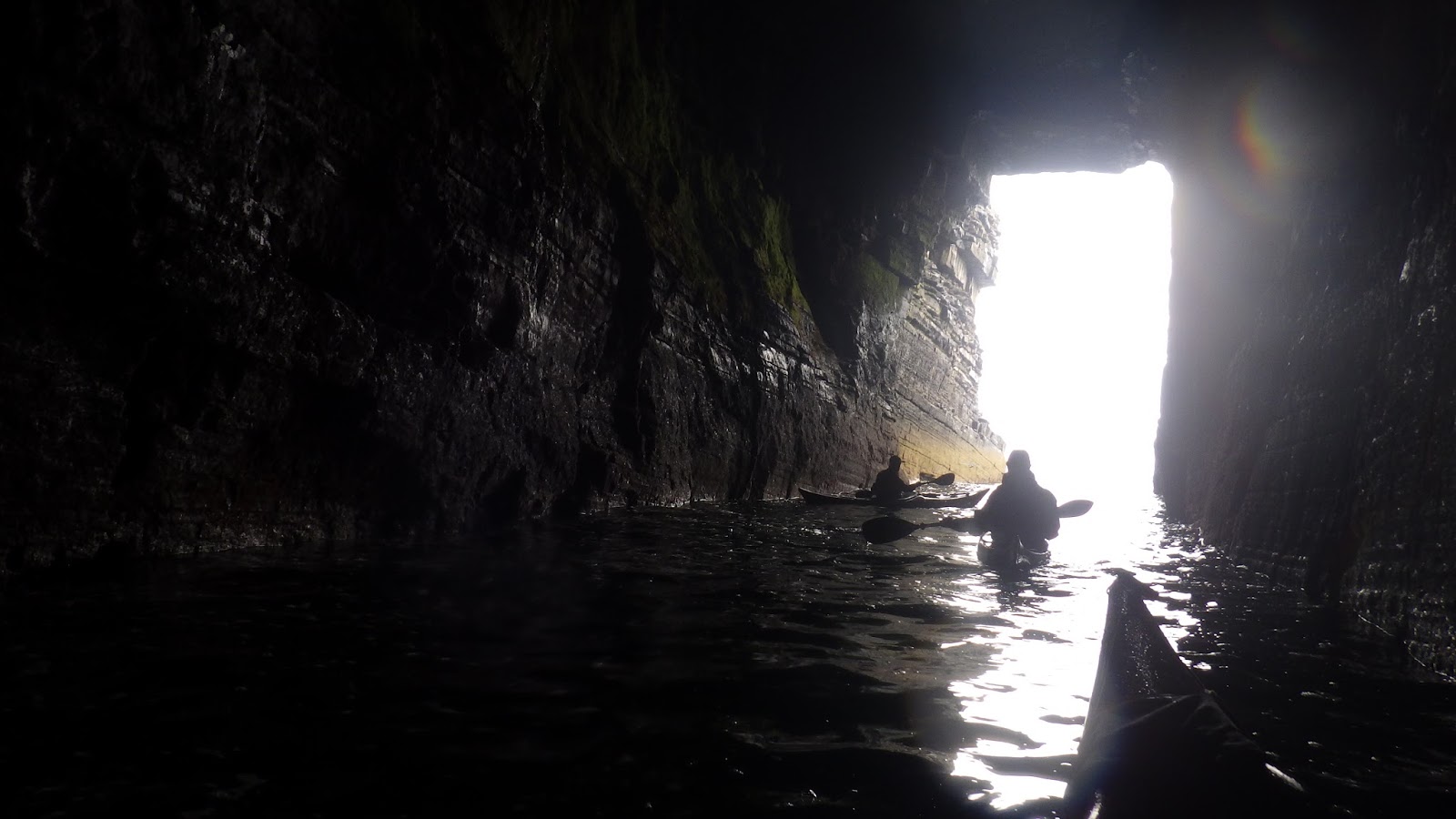


Day 3 was really wild with lots of rain so we saw the local delights and various neolithic sites.
Day 4 although still windy, we went for a down wind run in the protected Scapa Flow. The result 18 km covered in 2 hours! As one of the team said they did more surfing in that 2 hours than they had done in the last year!!


Days 5 and 6 and we finally had a more settled forecast and the potentially of an overnight. Fins town with the Westerly wind on our backs and into the String (the sound between Mainland Orkney and Shapinsay, around Berwick Head and South to The Ness and a super wild campsite.
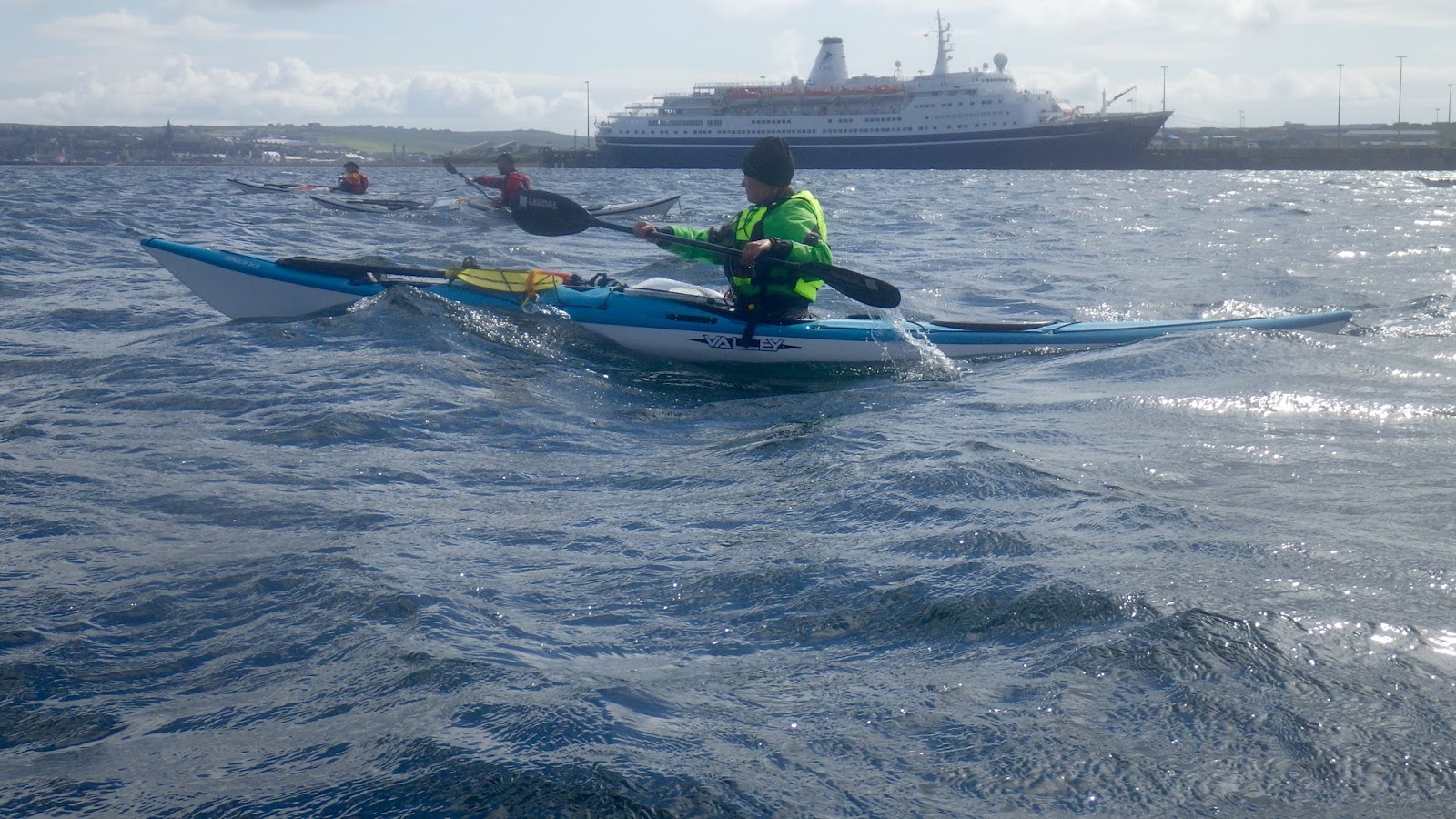


Douglas with the cannon lookout on the right!


A beautiful breakfast sunny morning, set us up for the day with a crossing to Shapinsay and a visit to the local cafe and super cute puppy only a few weeks old ...


The finish of our paddling, back at Finstown and a super happy bunch. Well done Julie for managing the guys and to all for making it a super trip, despite the mixed weather.

We crossed on the ferry with a super blue sky silky sea day, which would have been perfect with the SE wind to have paddled from Scotland to the Orkney. Another time!
Interested in Orkney? In 2017 there is a sea kayak festival on Orkney, i will be there and also offering a similar course beforehand. Details on a Coastal Spirit course will be out around Nov/December, so watch this space for 2017!
Thanks, Roger


Following our successful paddle around Mallorca, we took a day off and managed to stay and catch up with my good friend Pete and his family. This also allowed us to wash and sort out kit, charge phones/cameras and pause for a moment.
 |
Now I had heard of this but I hadn't really realised how significant this wind was ...
The strong Tramontana wind is a fairly regular feature of the region in all seasons except summer. This variant of the French Mistral wind blows NE-SW across the landscape for 3-12 days at a time, and can be bitter when the
This we experienced the day after paddling on to the North coast of Mallorca, with big swell and increasing winds. Yeah, it was cold too...
The forecast looked good for Tuesday and a ferry on that evening could also work. We had the one trolly, so we would try and walk the kayaks on, one at a time. Getting them on from Alcudia was fine and free, getting them off was more difficult! When we arrived we had to move the sea kayaks as one unit and with full kit and 12lts of water that was going to be challenging. We got the impression the Boss guy wanted to go home!!
|
 |
| Theres a special feeling walking a sea kayak on to a ferry, which feels like a real adventure ... |
 |
| Wishing we had brought two trollies ... after realising it was a 2km portage to the beach form the ferry port!! |
 |
| Into the beautiful setting light of the day |
 |
| We played with the swell and the light on the wall, savouring the moment ... |


 |
| Rounding the Southern tip, with the top light of the lighthouse and looking for a place to camp!! |
 |
| Bay after bay just looked amazing and with so much wild camping potential |
 |
| And yet more magical colour and clarity ... |
 |
| The cliffs were smaller than Mallorca, but still stunning |
 |
| Clear evidence of cave dwellings ... |
 |
| A beach bar at Cala Binidall with Wifi for forecasts and a cool beer ... perfect! |
 |
| Super little camp ... |
 |
| Crossing the entrance of Mahon |
 |
| Time for lunch ... |

 |
| The final push back to our start point, and into a head wind, but with some fun swell
With the evening paddle on the first day and 3 further days we were around Menorca and to be honest i felt like going around again and this time much slower. After Mallorca, finding places to easily camp/bivi was such a relief and the island was so green and softer. We had been told that camp/bivi was almost part of the Menorcan culture and the problems were more with the incomers who now own property!!
We made it about 120km around, but again we were able to cross from headland to headland on the North coast, if you had to keep closer in the mileage would go up.
We landed back at Ciutadella and discussed options. I was super keen for the crossing, so headed off for more lunch type food and some more water, while Barry went off to the ferry port to clarify times. We both met back at a cafe with Wifi and decided to find a sheltered bay, to camp again for the night and if the forecast held for the morning we would go for the crossing.
Open Crossing to Mallorca
The wind was a f3 East, there about, but 3-4km limited viability. Not ideal, but at least the wind was in a helpful direction. The main channel was about 40km across so we felt 7 hours and that would be done, then it was about getting back to Alcudia and were my van was. We set off on a bearing and after 1:30 hours we lost sight of land and worked on finding some rhythm ... as we left the shelter of the island swell got more confused and running at two different angles making my sea kayak more difficult to manage ...
|
 |
| It felt good to see the ferry from Mallorca ... |
 |
| The confused swell that was running ... |
 |
| And now the ferry from Menorca ... |
 |
| Now we hadn't been able to get a map that had both islands on. This was the best we could do ... ;) Around the 5 hour mark we saw Mallorca, but to be honest it was confusing and disorientating. What part of the island was it? I'd left my Mallorca map in the van. Well it was sunny before and I could see the whole island from Menorca!
Around 7hours, 30 minutes we had reached the Southern headland of Alcudia Bay and now the job was to paddle and find the van. 10 hours 40 and over 60 km paddled, the job was done. Wet tired and hungry we changed and loaded the kayaks.
|
 |
| Pleased to be in dry clothes and on the way to find some food. Happy days ;) |
And once again Mr Shaw, it twas fun fella ;)
Roger
PS: keep your eyes open for a sea kayaking expedition back out to Menorca in October 2016, with warm seas and settled winds - email me if interested - roger@coastalspirit.com
So when i was talking with Barry Shaw about my initial thoughts about a solo trip he was interested and suggested the Balearic's. I didn't need much convincing and over the next week or so, as we created a plan.

 |
| Driving on down and some super cloud formations |
 |
| We started on the SW side of the most Southerly point and this was our first lighthouse of many!! |
 |
| Thankfully we explored and stopped at this small Cala, which made for a perfect nights camp and with enough time to dry kit! |


 |
| As we moved up the East coast (were going anti clockwise), we had some super assistance form the wind. |
 |
| Honestly it is that kind of blue ... |
 |
| This magic blow hole was so much fun ... |
 |
| Day 2 had been a long day. Not through choice, just that we couldn't find a wild enough camp. Time to be up early then!! |
 |
| The variety and colour along the coast was fantastic |
 |
| just had to be done! |
 |
| having a floating break before crossing the bay of Alcudia |
 |
| Whoop, whoop... Cap de Formentor, the most Northerly point |
 |
| As the North coast unfolds, it was time to look for a camp! |
 |
| Do your stuff Mr Baz Dundee.... |
 |
| Cala Figuera and my trusted kit! |
 |
| Next morning was chilly and atmospheric!! |
 |
| Heading for Cala Sant Vincent for more water |
 |
| Just leaving Cala Sant Vincent, in an increasing swell and wind ... we turned back, due to the next section of coastline was to be the most committing, with no landing until Sa Calobra, which even then we were unsure about. |
 |
| The next day, rest and ready |
 |
| The morning sun really brought the coast alive ... |

 |
| We had a gentler increasing wind on our backs and smiled our way along the coastline ... |
 |
| Entrance to Torrent de Pareis |
 |
| Just trying to capture the height!! |
 |
| The cost was that good ;) |
 |
| Getting a fly by with a large flock of Shearwater's -it was such a great sweep through |
 |
| One of many we passed along the way |
 |
| Now on the SW side and on the way to the Bay of Palma! |
 |
| We found it ... just a little to close to Magaluf! |
 |
| Beautiful start to the next day, although 45 minutes into the crossing and the wind suddenly increased to Bf4 -5 the f5 gusting f6, offer and out of the bay!! Thank fully 1 hour latter the aggressive front had passed ... |
 |
| We can get this at home ... |
 |
| Final on the water lunch ... |
 |
| Having a good run along the coast in my Cetus ... |

 |
| Claa Sant Vincent and a 4km loop before returning ... |
 |
| Landing in Cala Sant Vincent |


training/assessment courses and InterMediate Plus. A few Bespoke private courses, during the week and with a near full callender up until late May.
With Summer just around the corner its a good time to start focusing on what you want from 2016 and those early wishes you may have made in January, to actually action!
Here is a list below of what is available currently.

- Introduction to sea kayaking private and unique. Available during the week, with details available here
- IntroMediate aimed at those who want to progress their sea kayaking skills with a gentle introduction to swell, current, wind and waves - 11/12th June, 9/10th July at £160. Have a look here
- InterMediate working towards 3 * performance skills - 28/29th May, 2/3rd July, 30/31st July at £160 p/p and during the week 19-22nd July at £270. Have a look here
- InterMediate Plus, is aimed at 4 star leader and performance skills, while working in moderate conditions - 18/19th June, 6/7th August at £160. Have a look here.
- Advanced sea kayaking is aimed at 5 star Leader and performance skills and at a ratio of 1:4 - 25/26th June, 23/24th July and 20/21st August at £160. Have a look here
- Coaching the Mind - for leaders, coaches and paddlers who want to increase their understanding, confidence and performance. Sports Psychology in action, with the first day of theory and work shops, which also can be used as a coaching up date and the 2nd day on the water putting theory into practice. Ratio of 1:4 and delivered by Lee Pooley and Roger Chandler. At £180 - have a look here for more information
- 4 star leader training with coastal navigation and tidal planning - 25-28th July at £270. Have a look here
- Orkney sea kayaking for top end Intermediate paddlers 8-16th August at £655. Have a look here
- 5 star leader training with open water navigation and tidal planning 17-21st September at £330 and only one place left. Have a look here

The course I want to draw attention to is the Advanced course and this one in particular was the 2nd, 5* Leader preparation course I had run over the Winter. The course was aimed at those who had done the 5* Leader training and wanted to work in 5* assessment conditions. This was in a work shop format on specific skills and tasks or areas each person felt supported their individual action plan.
From the forecast we had the perfect weekend with Penrhyn Mawr working for some tide race action, some swell, wind picking up from the NW for the night navigation in Trearddur Bay and then a Skerries open water crossing on the Sunday with remnants of the wind. It had been a long weekend with conformations, further learning and further action plans created ...
A Leadership model I have used over the years which I feel really works and may help to provide a useful structure is by John Adair and is called Action Centred Leadership (ACL) and works around three circles - Task, Team and Individual. You may have a main Task for example of leading an Advanced journey involving a couple of tide races and then sub tasks. A sub task could be getting the team of the beach, through the surf at the start of the day. If we consider the Task: Whats the strategy to achieve the task most effectively? How are you going to work the team, team functions, giving purpose, buddy system, sub leader/No2? and do any of the individuals need specific attention, encouragement, how can I use individuals so there work contributes over all to the team objective?
Generally its difficult, if not imposable to manage all three areas at once, so time is given to one of the three areas and once thats been achieved, attention needs to be given to the other areas. If for example only the Task is focused on, one can probably see the job gets down, at the expense of the Team and the Individual!
So why not explore and experiment using the model below and enhance your leadership abilities and skills, as well as surfing that tide race wave!
 |
| Action Centred Leadership - John Adair |
 |
| Tavi getting a good hit and looking solid ... |
 |
| Zoe working with Debs in Buddy Leadership |
 |
| The main race, with Zoe up flow, Julie centre and just the head of Debs (on the right) |
 |
| Leaving The Skerries on a flood tide |
Thanks to Tavi Murray for originally contacting me about the weekends and the idea. And Julie Jones, Debs Heldon and Zoe Robinson for making the weekend work. As for me, my personal learning was when you get a new paddle, remember to put reflective tape on it, just like you have on the other one. So if you ever loose a black paddle at night it may then just have a greater chance of seeing it!!
PS: Thanks to Zoe for finding my paddle, some 30+ minutes later!


2016 has started well and a number of courses are already full. The new calendar or find course by category, is up and running and dates are now up to August 2016. The following currently have places on and are going ahead:
6-7th Feb - Intermediate: aimed at working on 3 star skills and has only 2 places left, at a cost of £160.
5th March - Open Water Navigation & Tidal Planning: An element of the 5 star leader training, although this can be a stand alone theory course as well, providing a good understanding of coastal planning is already held. Cost £90
6-9th March - 5 star leader training: Advanced leadership and performance training, with night navigation also included. 2 days is the minimum requirement - 4 allows more time to allow for different sea conditions and processing. 5 days incl OWNTP at £330, 4 days at £270, 3 days at £230 and just the training at £160. Gain feedback and leave with a comprehensive action plan. 2 places are left.

16th March - Coastal Navigation & Tidal Planning (CNTP): Theory day around understanding weather, tides, charts and planning coastal journeys. Part of the 4 star leader training, although this day can also be attended if you have basic tidal planning understanding and you want to increase your understanding. Cost £90.
17-18th March - 4 Star Leader training: Leadership and performance training in Moderate conditions. 3 days with the CNTP above is £230, just the training is £160. Gain feedback and leave with a comprehensive action plan. 3 places are left.
2/3rd April - IntroMediate: Only 4 places on this course which gentle brings a paddler into contact with flow, wind, swell and small surf - Now only 2 places left. Cost £160.

Two further courses I will highlight here are the Pembroke Sea kayaking, which follows the Stackpole sea kayak festival which I'm working on and 'Coaching the Mind', sports psychology course.
23-25th May - Pembroke sea kayaking: This 2 or 3 day course is for InterMediate paddlers as a minimum and aims to paddle some to Pembroke's classic islands and locations. It follows the stackpole sea kayak festival, so hopefully within the 5 days we will get a mix of sea conditions, weather, wildlife and with Puffins galore!!. This is separate from the Stockpile festival so go direct to them to book on the weekend. With me, its £230 for 3 days or £160 for 2 days and only 4 places are left.
16-17th July - Coaching the Mind: This is the 2nd course we have run and it was a great success, in 2015. This year we are adding a one day option, by attending only the theory course. Or as before with the 2nd day on the water sea kayaking and putting mental skills training into action.
The first day is theory behind sports psychology, in brief and is a mix of PowerPoint, active work shops and discussion. This means its open to any one who is interested in improving their own performance and coaching style. So if you rock climb, white water paddle, stand up paddle board or mountain bike, then come along.

The 2nd day is putting mental skills training into a sea kayaking environment, to enable your confidence to be able to grow and use the techniques, with on the water support. Because of this minimum ability is InterMediate and the working ratio is 2:8 - two coaches to 8 individuals or one to four.
One day costs £90 and two days is £180. On both days Lee Pooley, one of British Canoings national trainers and Roger Chandler owner of Coastal Spirit.
Only 8 places on the 2 day option, and 6 are currently available. A further 4 places are available on the first day.

With all of the above either email info@coastalspirit.com or message me on FB, for further information. Check out my website for other course and if you want something unique and individualised, then consider Bespoke sea kayaking. In the week, set at your pace and designed for you.
I hope a course above inspires you and I look forward to working with you on the water soon.
Roger
www.coastalspirit.com


Back in Pucon and the lovely Ecole hostel, which served vegetarian meals with breakfast, lunches and dinners. In town but set a few blocks back from the main street. Ben from Kayak Chile had hired kayaks to Kate and Nick, the previous year. So after a few words we had kayaks, a driver and a van to drop us on the river and pick us up. Perfect!
Rio Liucura and the Rio Trancura, lower and upper were run over the following three days and a good mix from class 2-4. It was good for me to cover familiar ground again and work on getting a more accurate line, from a previous day. I was on a steep learning curve, that was for sure. Everything was faster, bigger and words such as 'pushy' became common place. Nick below.


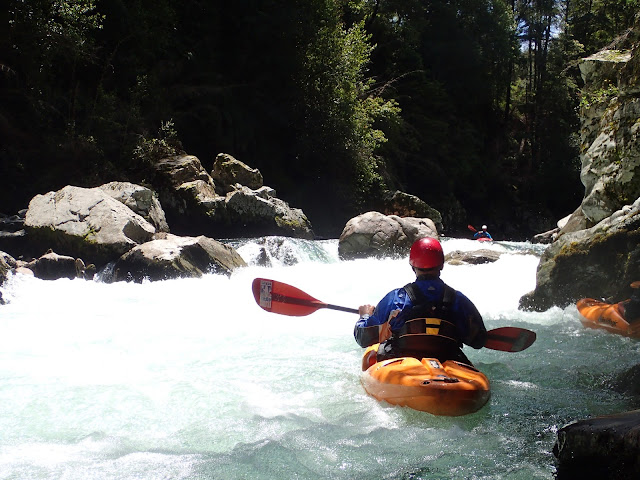

The Rio Machin had been amazing. Yes I had been scared and excited. I'd walk one short rapid, that looked really awkward. And even after that decision I was still happy with my call. I'd also paddled what felt like the crux rapid, which had taken me a few moments to gain my focus. I new I could make the right to left, must make move. Although what followed was much more hazy. Which probably explains why I landed in a hole and took a moment to roll up!!
A truly beautiful river. Technical and fast and at other times allowing enough time to pause. It was by far the hardest sustained and committing white water I had ever paddled. I was chuffed and tired!!

The following day I had booked to climb Villarica, with a company, as this was now a requirement. That evening was the first clear view of the Volcano towering over the town. Earlier in 2015 there had been an eruption, so the Volcano had been closed. Deciding to open the Volcano had moved very slow for the local companies, but at least there seemed to be a more standardised approach. For example, you could only access the mountain through booking on with a company and no more than 12 people with 3 guides also. I was looking forward to getting my legs working and at 2,800 mt, they were going to get worked!!


Id never done a whitewater road trip before and the 4 of us fancied hiring a pick up truck and kayaks off Ben and heading over to the West to paddle the Rio Fuy class 3+ and 4k and then the Rio San Pedro class 3 and 18km.

This is the Rio Fuy from the bridge and the get on is down in the eddy on the right. The guide book said the first section was steeper, then it eased off. This was my 5th white water day and 6th day of action. It was going like a train and all of the other rivers, had begun steady and allowed me time to warm up. This was fast, powerful and I was feeling anxious. My quiet inner voice was saying 'drive the van and run the shuttle' and i tried positive self talk and actually talked my self into running the river. After all its only 4km and I'd paddled harder and much further ....


That afternoon we drove across to the start of the Rio San Pedro and I reflected back on the day. Was it wise to do the next river? I didn't want to hold my buddies back and create difficulties but it was supposed to be an easier river and it certainly looked like it started gentle!!
Well it was a super nights sleep, really peaceful and a still morning. There was a river gauge and it was reading 1:8 mt, which based on the fact there was others further up the bank, suggested it was not in spate and more like normal conditions?!
I did a load of stretching and had a leisurely breakfast. This worked well. I took my self off 30 mins before every one else and did load of rolls. Working on the belief and understanding that mind and body are linked, so if I can influence my physiology I can also effect my psychology. I got my self into a good place and I felt happy to give it all a go.


Two rapids had been huge. Amazing wave trains, like South Stack race being funnelled into a narrow channel. I just kept looking for my amigos, working hard to see my line and deciding to follow or go more left or right of them. With also an awareness and one eye on any recirculating holes. None appeared that were problematic, and could be easily avoided. Body forward, eyes up and concentrate on the line, was my mantra. I was very pleased to have decided to paddle the Rio San Pedro as it felt like a fitting end to my time before SKPS.http://www.skps.cl
It had been totally amazing and good, to be in that student learning place. Uncomfortable at times with a need to dig deep, but also to be reminded of that inner voice that's often quite and gentle, yet is so knowledgeable.
The four amigos, with Kate, Christian, Nick and my self. Thanks to both Kate and Nick for the white water photos and for sharing a super time in Chile. And enabling me to achieve a BIG tick on my 50 things to do in 50's - paddling ww outside the UK!
Roger
www.coastalspirit.com
explore. dream. discover


We will beach surf or choose a downwind paddle if it is windy. If calm, we will choose one of the many tide races to work with.
This course is for moderate water to advanced paddlers who are comfortable in F4 winds, a 1-metre swell, and 2 knots of moving water, as a minimum.
Delivered by Roger
This is a British Canoeing Awarding Body training course and is also relevant if your interested in the personal performance award or keen to refresh your skills before the summer arrives!
With Roger.

 "The composite Virgo has been amazing. Very high performance, a dream to be able to accelerate quickly, as well as a wonderful carry to and from the water!
I've managed twice to paddle in the Swellies (solo and then with a friend) and once on South Stack tide race, on the ebb solo. South Stack was perfect as the wave faces were long and I could actually carve and change position on the wave. The boat really wants to surf!" - Roger Chandler, Coastal Spirit
📷: Craig Young
"The composite Virgo has been amazing. Very high performance, a dream to be able to accelerate quickly, as well as a wonderful carry to and from the water!
I've managed twice to paddle in the Swellies (solo and then with a friend) and once on South Stack tide race, on the ebb solo. South Stack was perfect as the wave faces were long and I could actually carve and change position on the wave. The boat really wants to surf!" - Roger Chandler, Coastal Spirit
📷: Craig Young  St Kilda here we come!!
We've just been buzzed by two bottlenose dolphins ...
St Kilda here we come!!
We've just been buzzed by two bottlenose dolphins ...  Great day with Sally working on boat handling, reading the water and its ok to feel uncomfortable.
Cemaes to Bull Bay was perfect, with wind with tide and then wind against by the afternoon so we got a few waves and a nice push along the coast.
It was nice to see Rob again too. Thanks for helping with the shutle!
Great day with Sally working on boat handling, reading the water and its ok to feel uncomfortable.
Cemaes to Bull Bay was perfect, with wind with tide and then wind against by the afternoon so we got a few waves and a nice push along the coast.
It was nice to see Rob again too. Thanks for helping with the shutle! "I've just completed a two day 4* Sea kayak training course with Roger. Having been coached by Roger in the past, I choose to do this course with Roger because I knew I would get a great deal from the course. My expectations were certainly well and truly met"
"There are a number of wonderful things about Roger. He has a very light touch in his coaching, and he's always smiling and encouraging you to relax into the enjoyment of the day"
"And I'm probably learning more from his mentoring now, as my paddling horizons expand, than ever before. I can't count how many questions I've asked... and he's answered. Roger has the knack of making that suggestion that radically changes your thinking and moves your paddling on in leaps and bounds."


